

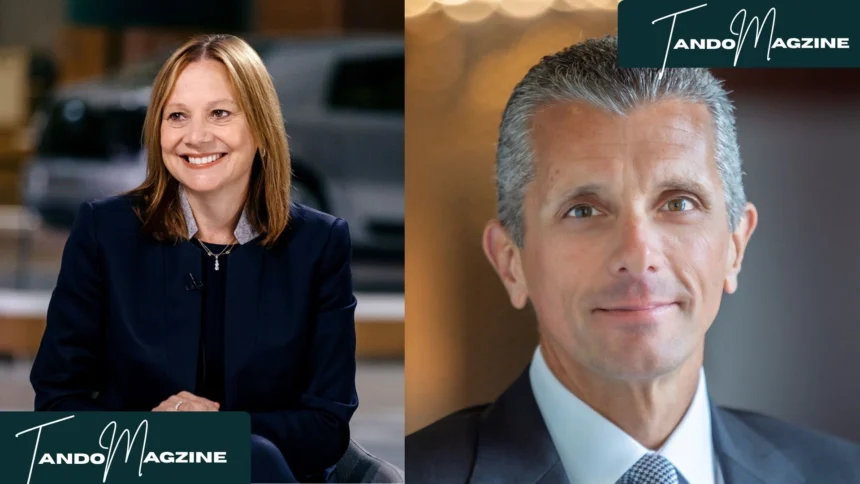

Mary Barra and David Cordani are prominent American business executives known for leading major companies through periods of industry change. Barra is the chair and chief executive officer of General Motors, while Cordani is the executive chair of The Cigna Group after serving as its CEO for nearly 17 years.
Despite their names appearing together in searches, there is no credible public evidence that Mary Barra and David Cordani are related, married, or business partners. Their main connection is professional: both built long careers inside large U.S. corporations before reaching the highest levels of leadership.
Mary Barra and David Cordani at a Glance
| Category | Mary Barra | David Cordani |
|---|---|---|
| Full name | Mary T. Barra | David M. Cordani |
| Current position | Chair and CEO of General Motors | Executive Chair of The Cigna Group |
| Primary industry | Automotive and transportation | Health insurance and health services |
| Joined company | General Motors in 1980 | Cigna in 1991 |
| Became CEO | 2014 | 2009 |
| Board leadership | GM chair since 2016 | Cigna chair since 2022; executive chair since July 2026 |
| Education | Electrical engineering degree and MBA | Business administration degree and MBA |
| Leadership focus | Vehicles, manufacturing, electrification and software | Insurance, pharmacy services and healthcare delivery |
Their careers developed in different industries, but both leaders share an important characteristic: they advanced through numerous internal positions rather than arriving as outside chief executives.
Who Is Mary Barra?
Mary Barra is the chair and chief executive officer of General Motors. She began her GM career in 1980 as a co-op student at the Pontiac Motor Division while studying at what was then known as the General Motors Institute, now Kettering University.
She earned a Bachelor of Science in electrical engineering in 1985 and later completed an MBA at Stanford Graduate School of Business in 1990.
Barra’s career at GM exposed her to several major areas of the company. Before becoming CEO, she worked in engineering, manufacturing, human resources, product development, purchasing and supply-chain management. This range of responsibilities gave her experience with both the technical and organizational sides of a global automaker.
She became CEO in January 2014 and was elected chair of the GM board in 2016. Her appointment was historically significant because she became the first woman to lead a major global automobile manufacturer.
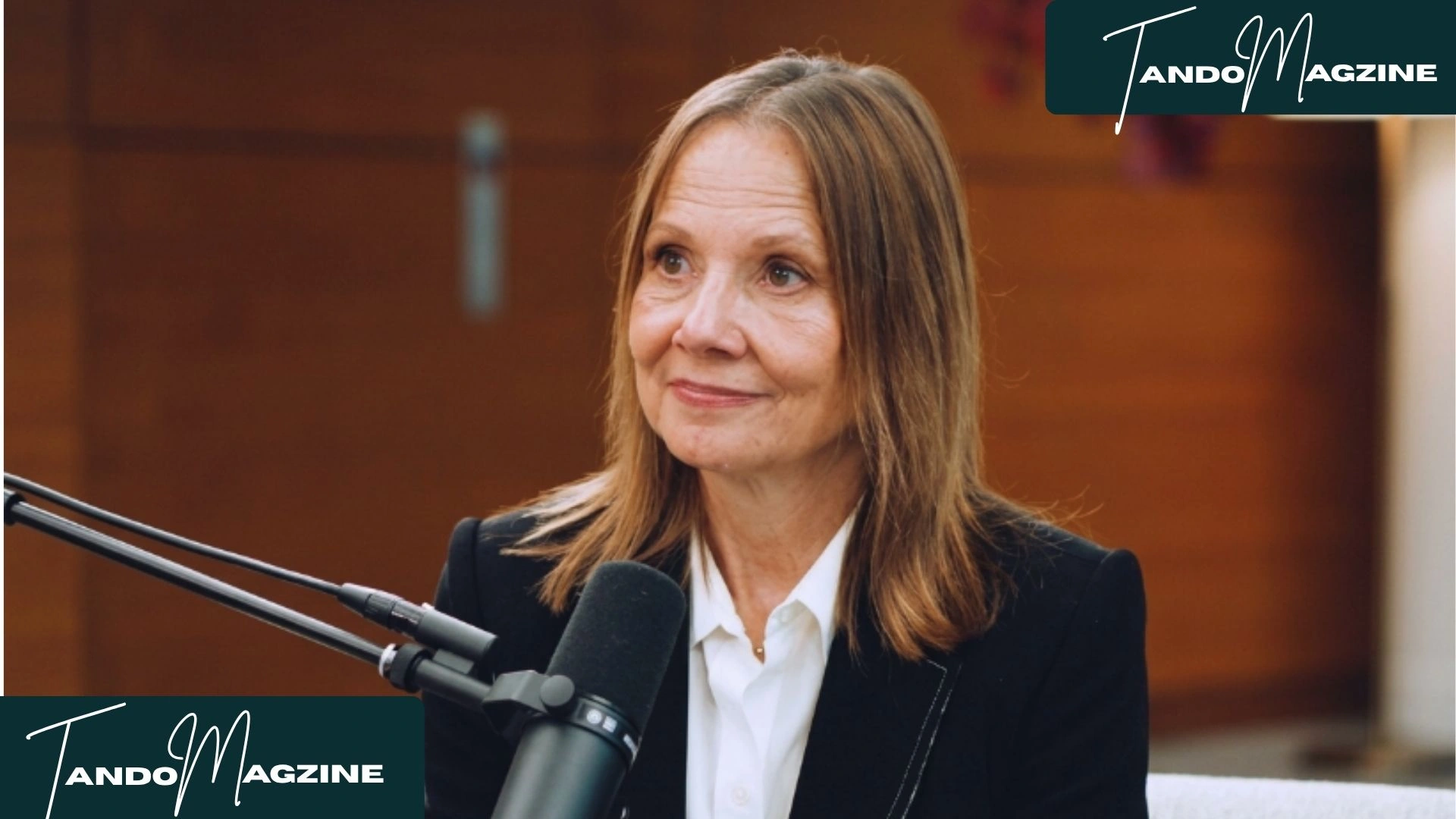
Barra’s Leadership at General Motors
Barra assumed leadership during a difficult period for GM. Early in her tenure, the company faced intense scrutiny related to defective ignition switches and its handling of vehicle-safety information. The crisis placed questions of accountability, transparency and corporate culture at the center of her first year as CEO.
In the years that followed, her responsibilities expanded beyond managing a traditional automobile company. The automotive industry began moving toward electric vehicles, connected services, advanced driver-assistance systems and software-based features.
Under Barra, GM invested in electric-vehicle platforms, battery production, vehicle software and autonomous-driving technology. The company also had to balance these long-term investments against current consumer demand for gasoline-powered vehicles, trucks and SUVs.
This creates one of the central challenges of Barra’s leadership: GM must prepare for a technology-driven future without neglecting the products that generate much of its present revenue.
Her long tenure provides deep knowledge of GM’s factories, workforce and product-development process. At the same time, her performance remains tied to practical results, including vehicle quality, profitability, affordability, successful product launches and the commercial return on new technology investments.
Who Is David Cordani?
David Cordani is the executive chair of The Cigna Group, a global health company operating through businesses that include Cigna Healthcare and Evernorth Health Services.
Cordani joined Cigna in 1991 and progressed through several leadership positions. His previous roles included chief operating officer, president of Cigna HealthCare and senior vice president responsible for customer segments and marketing.
He holds a Bachelor of Business Administration from Texas A&M University and an MBA from the University of Hartford.
Cordani became Cigna’s CEO in 2009 and chair of its board in 2022. On July 1, 2026, Brian Evanko succeeded him as CEO, while Cordani moved into the position of executive chair.
That distinction is important when describing his current career. Cordani remains part of Cigna’s senior governance structure, but he is no longer the company’s chief executive.

Cordani’s Transformation of Cigna
When Cordani became CEO, Cigna was primarily recognized as a health insurer. During his tenure, the organization developed into a broader health-services company with operations spanning employer health plans, pharmacy benefits, specialty pharmacy services, behavioral-health support and other healthcare capabilities.
A major step in this transformation was Cigna’s acquisition of Express Scripts in 2018. The transaction substantially expanded the company’s presence in pharmacy-benefit management and health services.
Cigna later organized its principal capabilities around two major divisions: Cigna Healthcare and Evernorth Health Services. Cigna Healthcare focuses largely on insurance and coordinated health solutions, while Evernorth houses pharmacy, care-management and related health-service capabilities.
Cordani’s record therefore cannot be assessed only through insurance membership. His leadership also involved acquisitions, portfolio changes, regulatory pressures, healthcare affordability and the integration of multiple services within a larger organization.
The healthcare sector remains closely scrutinized because company decisions can affect access, treatment approvals, prescription costs and household expenses. As a result, leaders such as Cordani must answer not only to shareholders but also to employers, patients, regulators and healthcare professionals.
Two Different Industries, One Similar Career Pattern
The clearest similarity between Mary Barra and David Cordani is how they reached the top.
Barra spent more than three decades at General Motors before becoming CEO. Cordani spent approximately 18 years at Cigna before assuming its chief executive position. Both developed their authority through extensive knowledge of their respective companies.
This approach offers several potential advantages:
- A detailed understanding of company operations and culture
- Established relationships across business divisions
- Experience with previous organizational changes
- Familiarity with industry regulations and customer expectations
- The ability to evaluate strategy using long-term institutional knowledge
However, internal promotion can also create risks. A longtime company leader may be closely associated with existing systems and established assumptions. The executive must demonstrate an ability to challenge familiar practices instead of simply protecting them.
Both Barra and Cordani faced that test. Barra had to move a century-old manufacturer toward electric, software-enabled and increasingly automated transportation. Cordani had to expand a traditional insurer into a more diversified health-services organization.
How Their Leadership Challenges Differ
The industries led by Barra and Cordani operate according to very different demands.
Barra’s Operational Challenge
Automobile manufacturing depends on physical products, factories, supply chains and complex safety requirements. Strategic mistakes can lead to expensive recalls, production delays or unpopular vehicles.
Barra must manage the transition toward new technology while responding to changing fuel prices, consumer preferences, government policies and international competition. The success of GM’s strategy ultimately depends on whether customers purchase and trust its vehicles.
Cordani’s Healthcare Challenge
Health services involve insurance contracts, medical costs, prescription-drug systems, provider networks and extensive regulation. The consequences of company policies can directly affect people seeking medical treatment or attempting to afford medication.
Cordani’s challenge was to expand Cigna’s capabilities while demonstrating that its scale could produce better coordination, efficiency and affordability. Those claims remain subject to public, political and regulatory examination.
Are Mary Barra and David Cordani Connected?
No documented family or personal relationship between Mary Barra and David Cordani was identified in the reliable public sources reviewed for this article. They have led separate companies in unrelated industries and followed independent professional paths.
They may appear together in executive lists, corporate-leadership discussions or comparisons of major U.S. companies. That professional proximity should not be mistaken for a private relationship or joint business venture.
What Their Careers Reveal About Corporate Leadership
Their careers show that transformation does not always require an outsider. An executive who has spent decades inside a company may still lead major strategic change, provided that institutional knowledge does not become resistance to new ideas.
Barra’s career demonstrates the value of combining engineering and manufacturing knowledge with broader business leadership. Cordani’s career illustrates how experience in operations, customer segments and healthcare management can support the expansion of a company’s business model.
Their records also show that corporate transformation is rarely complete. Electric vehicles and automotive software continue to evolve, while healthcare affordability and access remain unresolved national concerns. Announcing a strategy is only the beginning; leaders are ultimately judged by execution, measurable results and how their decisions affect customers.
Mary Barra and David Cordani are therefore best understood as separate leaders with comparable career patterns. Both rose through the organizations they later led, both oversaw significant strategic change, and both operated in industries where business decisions carry consequences far beyond the boardroom.